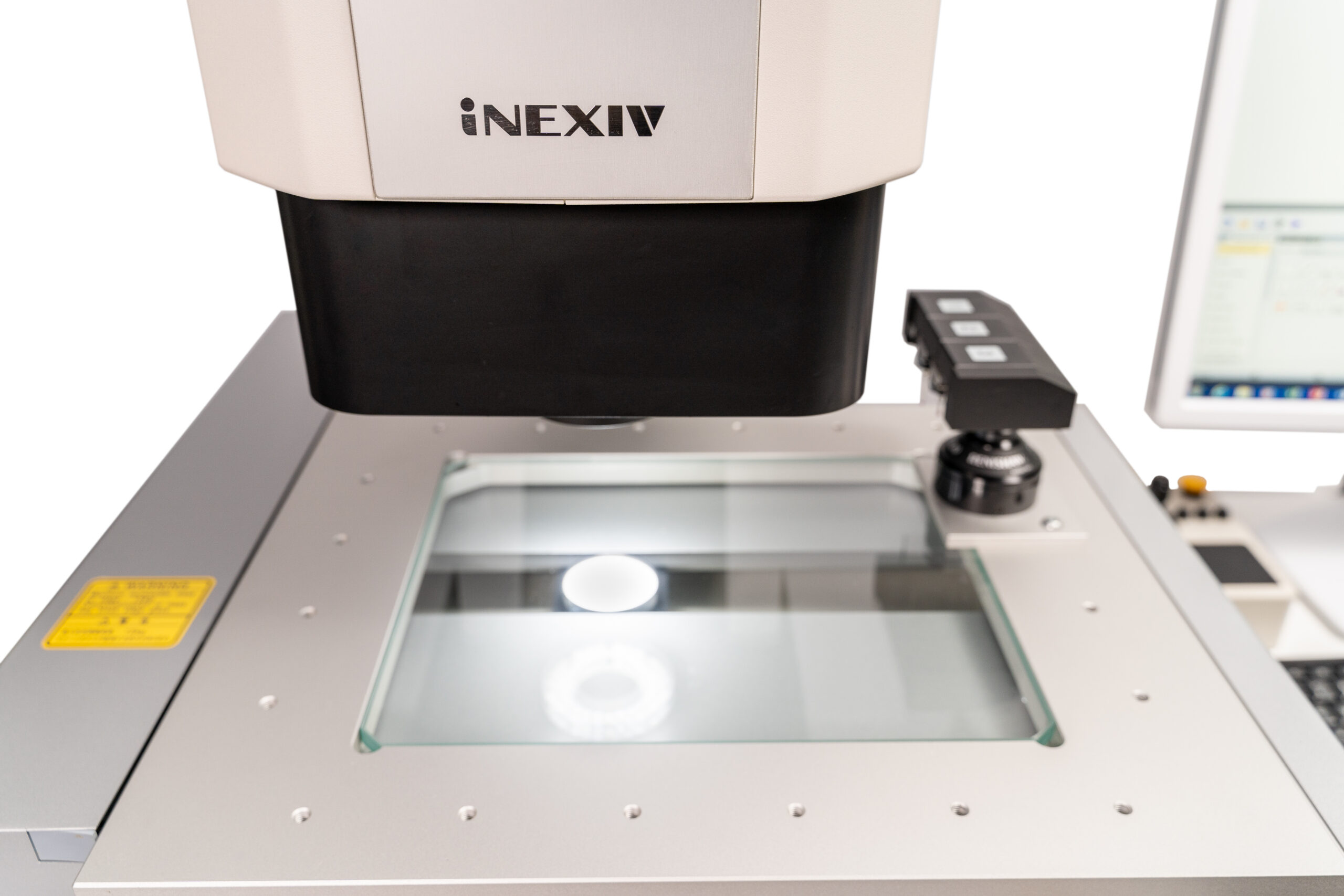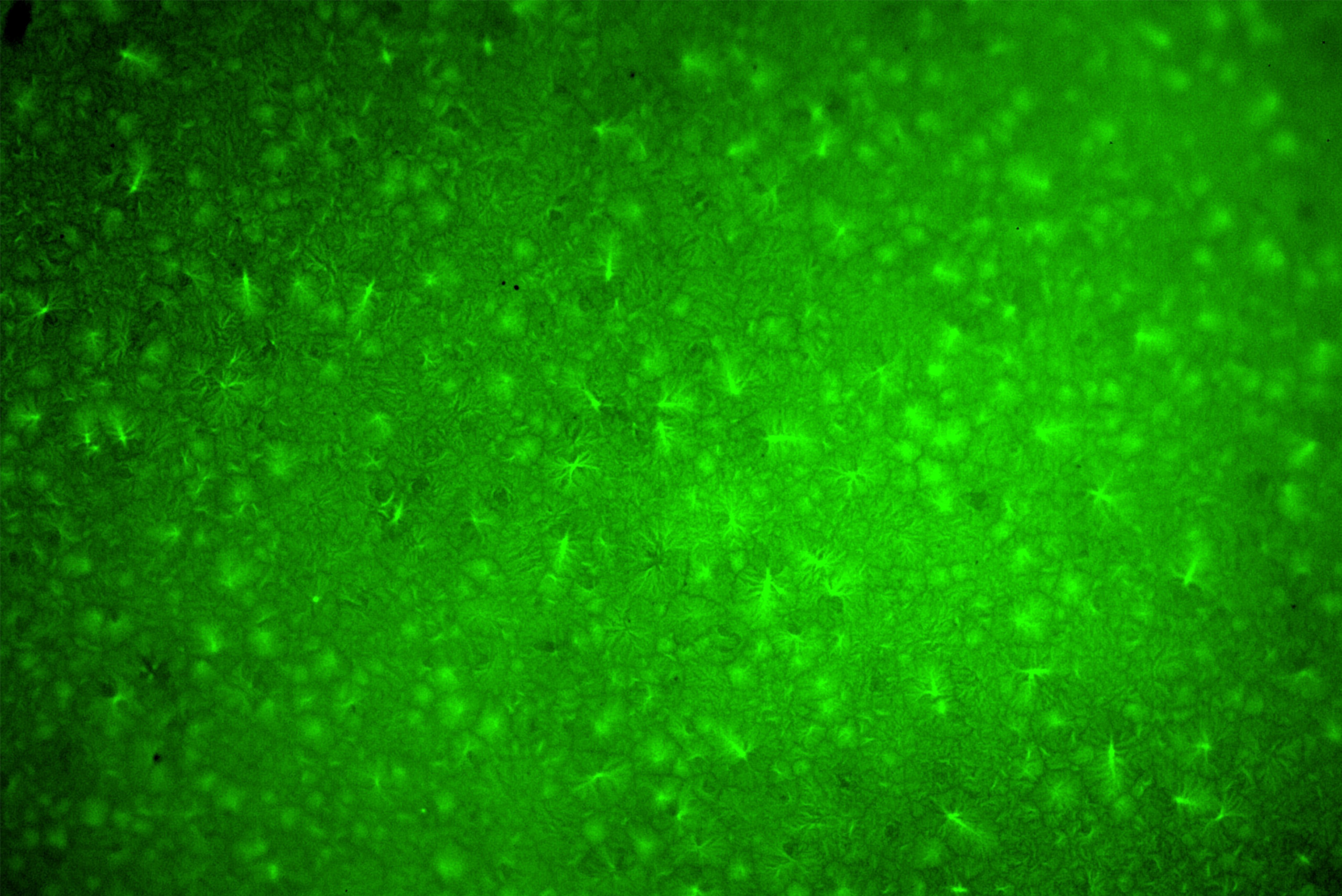
Founded in 1997, GBS metrology GmbH develops, manufactures and sells optical 3D sensors and profilometer for rapidly measuring, recording and evaluating microgeometries, surface structures and roughness with extreme resolution based on the principle of coherence scanning (white-light) interferometry. Manufactured in Ilmenau, Germany, the systems are used not only in the laboratory, but also in production environments, including within production lines for real-time quality control.
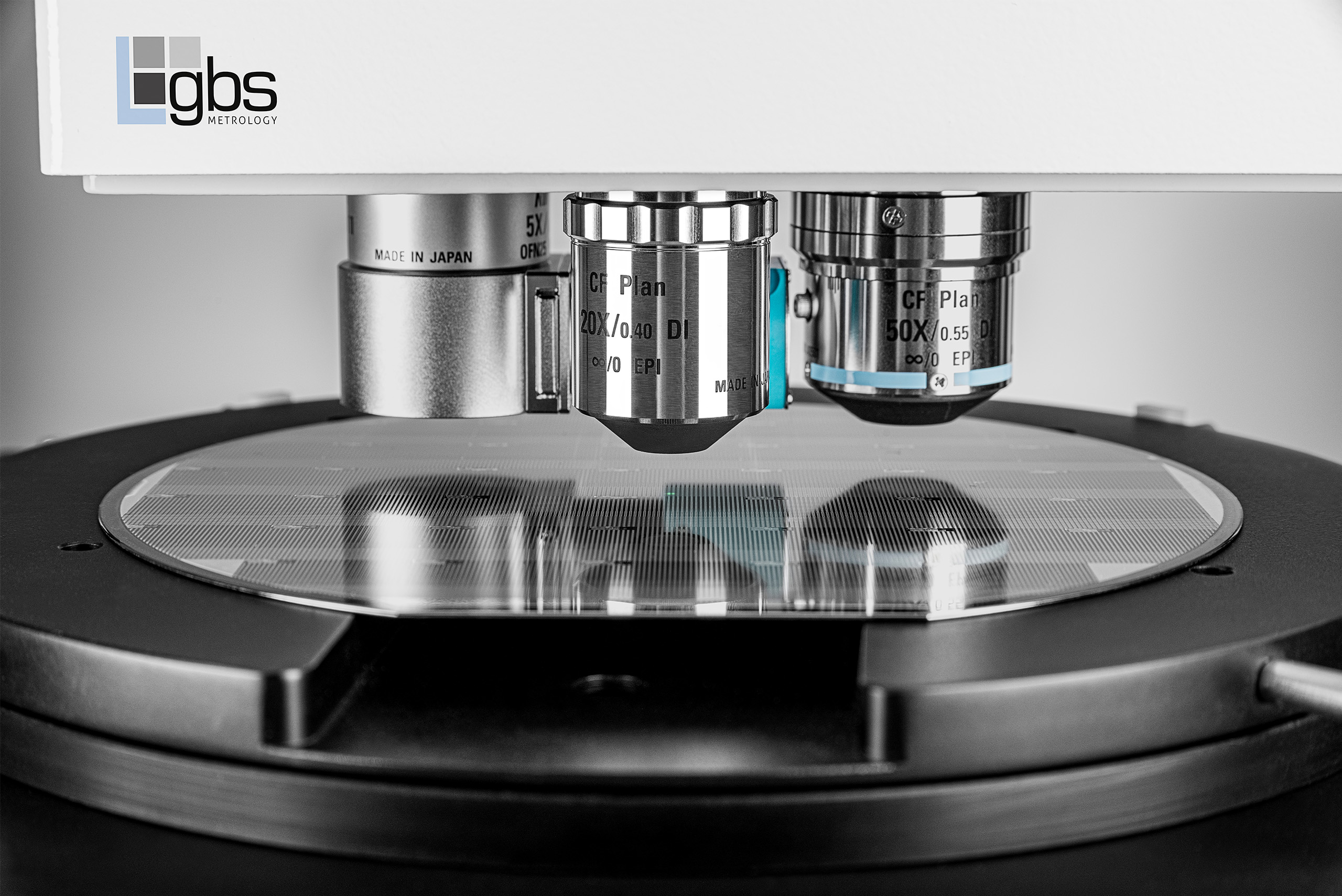
Typical application areas of coherence scanning interferometry include semiconductor wafers, micro-machined surfaces produced by grinding or laser structuring, aero-engine components, medical implants, additively manufactured parts, precision optical elements, and components used in tribological investigations. In these fields, high vertical resolution combined with rapid, non-contact areal measurement is essential for both research and industrial quality assurance.
The measurement principle relies on high-performance interferometric microscope objective lenses. Since the early development phase of the smartWLI product series, prior to its market introduction in 2007 and continuously thereafter, GBS metrology has employed interference objectives supplied by the Industrial Metrology Business Unit of Nikon Corporation. These include Nikon CF IC EPI Plan DI double-beam mirror-type (Mirau) interference objectives as well as Michelson-type CF IC EPI Plan TI interference objectives, which provide the optical basis for robust, high-contrast interference signal acquisition across a wide range of magnifications.
Matthias Liedmann, Sales Director of GBS metrology, stated:
“We have been using Nikon interference objective lenses successfully for many years. They are characterized by consistently high optical quality. Their compact design and low weight are advantages in applications where several lenses are used on a microscope turret.”
The Mirau configuration integrates a miniaturized beam splitter and reference mirror directly within the objective, whereas in the Michelson configuration these components are located externally. Michelson objectives offer a comparatively wide field of view, long working distance, and low magnification, typically up to 5×, making them particularly well suited for high-resolution roughness and texture measurements. Mirau objectives, in contrast, enable higher magnifications of up to 100× and are optimized for applications requiring fine lateral resolution over smaller measurement fields.
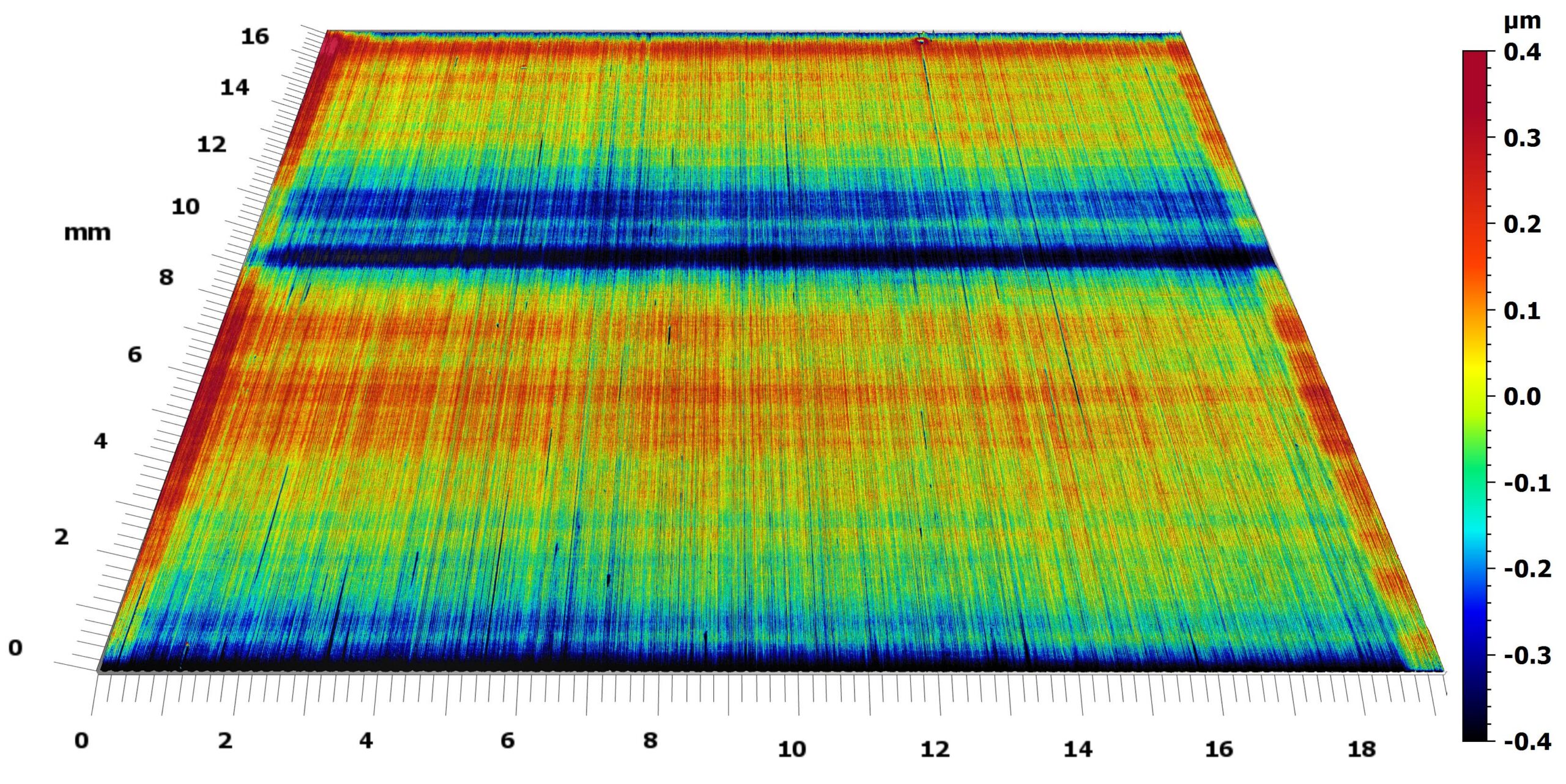
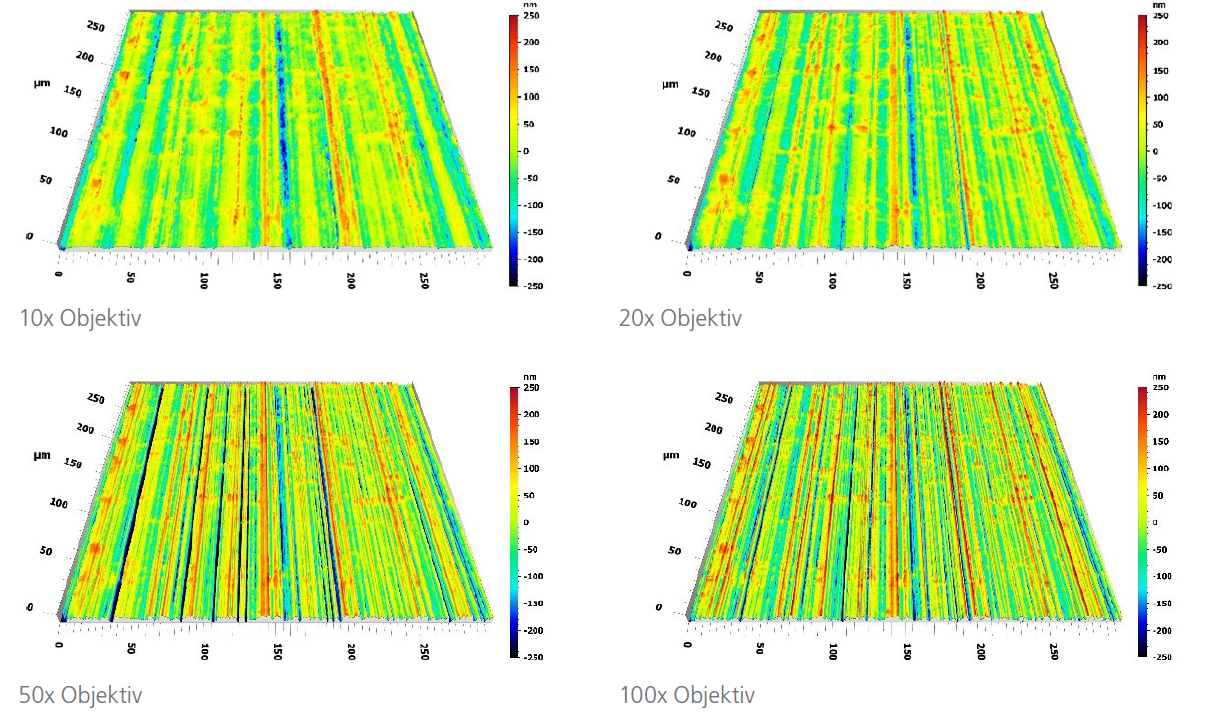
Accordingly, Mirau objectives are predominantly used for detailed characterization of surface roughness, texture, and micro-geometry, while Michelson objectives excel in fast, large-area scanning and stitching of multiple fields of view. A key advantage of coherence scanning interferometry implemented in GBS metrology systems is that the achievable height resolution remains largely independent of objective magnification and measurement field size, enabling flexible adaptation to diverse measurement tasks without compromising vertical resolution.
Coherence scanning interferometry provides significant advantages for roughness and surface structure analysis, as it allows the measurement of extremely smooth surfaces exhibiting sub-nanometer roughness within short acquisition times. This capability enables reliable detection and evaluation of very small surface defects over comparatively large areas, supporting both research-grade analysis and industrial process control.
The smartWLI nimbus8 optical 3D sensor combines a high-speed, high-resolution 10GigE (Gigabit Ethernet) camera interface with an 8 MP sensor for measurement data acquisition and real-time image processing. The use of massively parallel computing on NVIDIA graphics processing units allows high measurement throughput while maintaining excellent signal quality, extending the performance envelope of coherence scanning interferometry in both laboratory and production environments.
High-resolution three-dimensional surface measurement enables the characterization of microscopic roughness as well as macroscopic waviness, raised edges, and localized defects within a single measurement. Using a 10× objective, the smartWLI nimbus8 achieves a lateral sampling distance of 0.5 μm, fulfilling the requirements of ISO 21920 for ISO-compliant roughness measurements. For applications requiring even higher lateral resolution, objectives with greater magnification can be seamlessly integrated.
Advanced signal processing algorithms compare the measured interference signal with an ideal reference signal to derive a data quality metric. This approach allows reliable detection of weak interference signals on steeply inclined surfaces and effective suppression of outliers, resulting in highly accurate point clouds without the need for resolution-reducing matrix filtering. The combination of optical performance, sensor architecture, and data processing underpins the versatility and measurement reliability of GBS metrology’s optical 3D sensors and profilometer systems.